
04 Feb 2026
Why Gas Choice Makes A Bigger Difference Than You Think In Sheet Metal Laser Cutting
When engineers specify sheet metal laser cutting, attention usually centres on material grade, thickness and available laser power. Those inputs...

In many drawings, the metal bend radius appears as a small dimension tucked beside an angle callout. It can look like a formatting detail rather than a structural decision. In reality, metal bend radius selection directly influences stress distribution, fatigue life and long-term performance.
During sheet metal bending, material fibres stretch, compress and shift relative to the neutral axis. The tighter the internal radius, the higher the localised strain. That strain affects crack initiation, edge integrity and dimensional stability. A radius chosen without considering load case, material grade or lifecycle expectation introduces avoidable weakness.
Bend radius selection is therefore an engineering judgement. It defines how the component behaves in service, not just how it looks when formed.

When a flat sheet is formed, the material does not bend uniformly across its thickness. The outer surface experiences tensile strain. The inner surface undergoes compression. Between them sits the neutral axis, which shifts slightly towards the inside of the bend during deformation.
As the internal radius decreases, tensile strain on the outer fibre increases sharply. Stress concentrates along the bend line. The tighter the radius, the more severe this concentration becomes. This behaviour directly influences sheet metal strength and long-term reliability.
Internally, the following occurs during bending:
If tensile strain exceeds the material’s elongation capacity, microfractures begin to form along the outer surface. These may not be visible immediately, yet they reduce the structural margin.
Reducing the internal radius increases tensile strain in direct proportion to the material thickness. The relationship is geometric rather than cosmetic. A smaller radius forces outer fibres to stretch over a tighter arc. If this strain exceeds allowable elongation, the material begins to crack at a microscopic level.
Repeated loading then accelerates crack growth. Over time, what began as a marginal design choice can evolve into structural failure.
For engineering firms developing prototypes, this interaction matters. The minimum bend radius cannot be selected in isolation. It must reflect material grade, temper condition and expected service loads. Tight radii may appear efficient on paper, yet they often transfer risk into later production stages.
Fatigue performance depends heavily on stress concentration. Sharp internal radii amplify local stress, particularly under cyclic loading. Each vibration cycle propagates existing microcracks incrementally.
Larger radii distribute strain over a broader area. Stress concentration reduces. Crack initiation slows. Fatigue life extends.
This becomes particularly relevant in applications such as:
In these scenarios, a modest increase in internal radius can deliver measurable gains in lifecycle durability. For manufacturing SMEs supplying repeat production parts, that design adjustment reduces warranty exposure and replacement risk.
Sheet metal exhibits directional properties as a result of rolling during manufacture. The grain direction reflects an elongated crystal structure aligned along the rolling axis. Mechanical behaviour differs depending on whether bending occurs with or across this grain.
Bending across the grain typically allows greater elongation before fracture. Bending parallel to the grain restricts elongation and increases cracking risk, particularly at tight radii.
When a small minimum bend radius is specified parallel to the grain direction, fracture probability rises significantly. This effect intensifies in higher-strength materials where ductility is lower.
Accurate grain orientation planning during sheet metal forming is therefore a structural requirement rather than a production convenience.
Springback in sheet metal describes elastic recovery after forming. Once the bending force is removed, part of the deformation reverses. The component opens slightly from the intended angle.
Larger radii increase the proportion of elastic deformation relative to plastic deformation. As a result, springback magnitude rises. Designers seeking precise dimensional control must account for this behaviour during bend radius calculation and tooling setup.
If springback is underestimated, angle tolerances drift. In assemblies requiring a tight fit, this can create stacking errors. Manufacturing SMEs operating at scale experience this as repeated dimensional deviation and increased inspection adjustment.
Accurate modelling and controlled forming parameters are required to balance radius selection against dimensional targets.

Material properties alter how a given metal bend radius affects structural behaviour.
Mild steel offers moderate yield strength with relatively high ductility. It tolerates smaller radii more readily than many higher-strength alloys. Cracking risk remains present, yet the material provides greater forming latitude.
Stainless steel typically exhibits higher yield strength and lower elongation compared with mild steel. Springback is more pronounced. Tight radii increase surface cracking risk, particularly in austenitic grades if grain direction is ignored.
Aluminium presents lower yield strength but elongation varies significantly by grade and temper. Certain alloys are susceptible to tearing at small radii. Careful review of thickness to bend radius ratio is required when selecting aluminium for structural use.
| Material | Ductility Level | Springback Tendency | Minimum Radius Sensitivity |
| Mild Steel | Moderate | Moderate | Moderate |
| Stainless Steel | Lower relative elongation | Higher | High |
| Aluminium | Grade dependent | Moderate | Moderate to High |
Material choice cannot be separated from radius selection. The two variables interact directly.
The thickness-to-bend-radius ratio governs strain distribution. A common rule of thumb sets the internal radius equal to the material thickness. Ratios approaching 1:1 increase tensile strain at the outer fibre. Ratios below 1:1 amplify fracture risk, particularly in higher-strength materials.
As the thickness increases, the required radius should increase proportionally. Failing to scale radius with thickness forces outer fibres to stretch beyond safe limits.
Practical design considerations include:
This ratio forms a structural baseline, not a cosmetic guideline.
The edge condition before bending influences crack initiation. Burrs, notches or surface defects act as stress raisers. When tight radii are applied to edges with minor imperfections, strain concentrates at those points.
Microfractures often originate at these locations. Over time, they propagate under load. Clean, accurate cutting before forming reduces this risk and supports consistent structural performance.
Bend radius selection and edge preparation operate together. Ignoring one weakens the effectiveness of the other.
Finite Element Analysis FEA allows engineers to model stress concentration across bend regions before production begins. By simulating varying radii, designers can visualise strain distribution and identify high-risk zones.
This approach reduces iterative prototyping and supports design for manufacture DFM. It enables informed adjustment of radius, thickness or material grade before tooling is committed.
Collaborative review between the designer and the fabrication specialist at this stage prevents late-stage redesign and production delay.
Effective metal bend radius selection begins with clarity on function rather than convenience.
Key questions include:
Aligning radius choice with these parameters strengthens reliability and reduces downstream failure risk.
At Greengate Metal Components, these discussions form part of our sheet metal bending and forming services. Bend radius is evaluated alongside material, load case and tolerance requirements, supporting durable performance rather than short-term manufacturability.

When engineers specify sheet metal laser cutting, attention usually centres on material grade, thickness and available laser power. Those inputs...
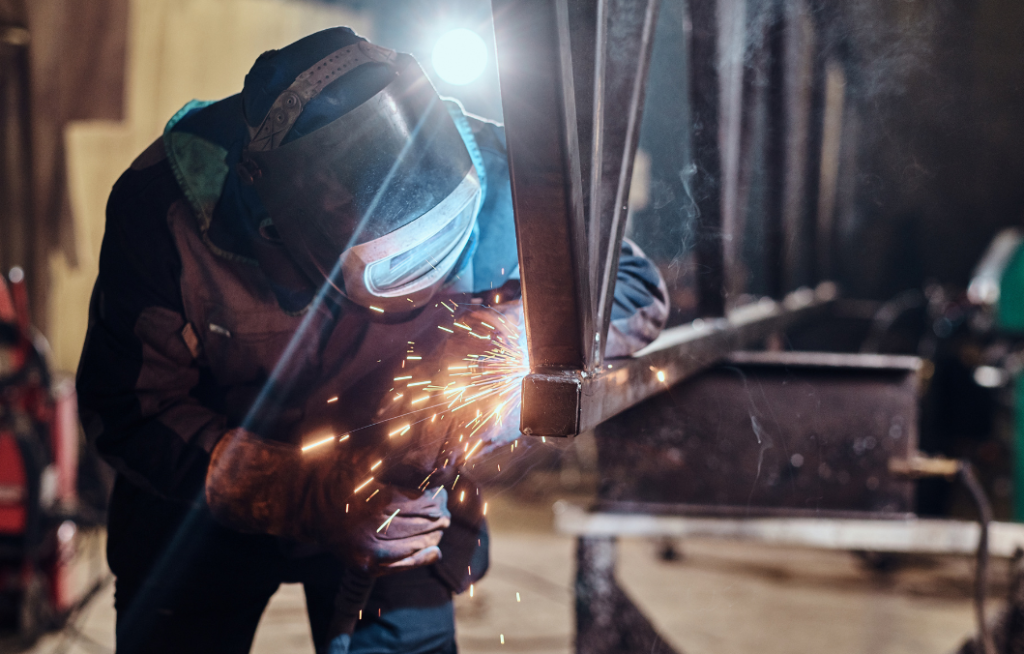
Welding distortion is not random. It is the predictable result of thermal expansion followed by constrained contraction. When weld metal...
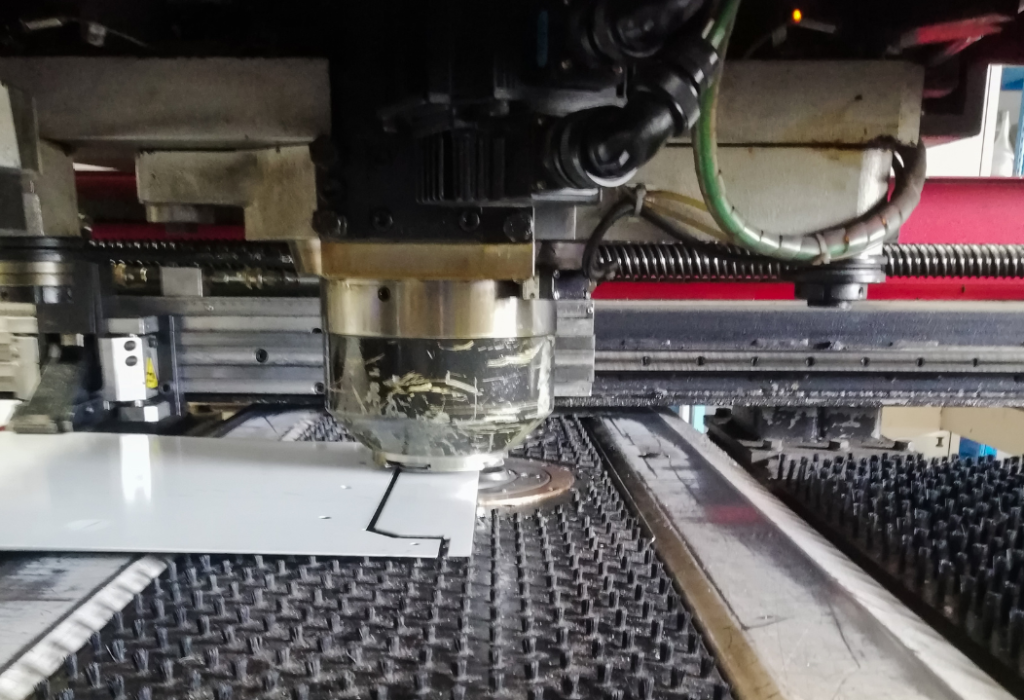
Punching is a controlled shearing process governed by force, clearance and tool condition. On a drawing, a hole or slot...