
10 Feb 2026
How Bend Radius Selection Impacts Strength In Sheet Metal Bending
In many drawings, the metal bend radius appears as a small dimension tucked beside an angle callout. It can look...

In metal fabrication, some decisions come down to the smallest details. And yet, one of the most important is also one of the broadest: formed or welded? The answer often depends on more than just the part itself. That is, design intent, production scale, structural performance, and appearance all shape the choice.
At Greengate Metal Components, these are the conversations we have with engineers and buyers every week – and this article outlines the key factors that usually guide that decision.
Welded assemblies are typically the go-to when absolute strength is non-negotiable. Welds, by nature, create a permanent bond. This bond doesn’t just hold pieces together – it actually fuses them into one. That level of structural integrity is often ideal for load-bearing or safety-critical components.
Formed assemblies, though, are by no means weak. In fact, the right folding technique can strengthen a panel without needing any additional parts. A fold reinforces metal much like a crease stiffens paper – just on a much sturdier scale. At Greengate, we often use folding to introduce structural support within the design itself, which helps reduce reliance on added joints or fasteners, particularly in weight-sensitive applications.
Where every gram counts, formed parts come into their own. Welding adds material through filler, not to mention fasteners in some hybrid designs. Over time, all that adds up. Formed sheet metal components, on the other hand, typically use less raw material and require fewer extras to hold shape or perform.
That makes forming well-suited to industries where weight matters – think aerospace, automotive, or portable equipment. Lighter builds can improve fuel efficiency, reduce strain on systems, and simplify installation.
Greengate’s experience in this space often comes into play during early-stage design, where the right material choices and forming techniques can prevent overengineering.
Producing a complex part without welding might sound unlikely, but forming makes it more achievable than you might expect. Deep draws, gooseneck bends, hems, and joggles – all these techniques can create detailed shapes in one smooth motion.
Welded assemblies often require separate parts, joined in steps. Each weld line adds complexity, time, and sometimes even potential for distortion. Greengate’s tooling capabilities allow for forming shapes that might otherwise seem unfeasible, especially in short-run or prototype settings where time and accuracy are at a premium.
Sometimes, the final look of a part matters just as much as how well it performs. In those cases, welding offers a clear benefit. Welded seams can be ground smooth and blended until the join is invisible. That is especially handy where surfaces need to be hygienic or waterproof – or where a clean, minimal look is part of the product design.
Formed pieces, meanwhile, don’t involve any added joins at all. That can be a bonus for corrosion resistance and material continuity. Yet bends, folds, and corner details can still be visible.
At Greengate, we often support design tweaks that strike a balance between appearance and function – for example, hiding folds in less visible areas or applying post-form finishing techniques where aesthetics are a priority.
Forming is usually faster. One tool setup, one press cycle, and one piece shaped to spec. When scaled up, that sort of speed can save serious time and cost.
Welding, by comparison, tends to be more labour-intensive. It involves prep, positioning, tacking, joining, and potentially finishing. Automated welding systems can help speed things up, but the overall process still tends to be slower per part than forming. Greengate’s forming setups are built for throughput, particularly where high-volume sheet metal production must keep pace with tight deadlines and shifting order sizes.

Every extra step in production adds cost and time. Forming, especially with the right tooling, often produces a part that needs no additional work. The shape is built into the bend. Edges are clean. No joins to grind down, no heat zones to treat.
Welding, however, rarely ends at the weld. Most parts need finishing – whether that means grinding for appearance, sealing for performance, or prepping for paint or coating. We often guide customers at Greengate to lean into forming, where minimal post‑processing is a priority, particularly when fast turnaround and consistent surface quality matter.
Welded joints are not just stronger – they are also potential weak spots, especially in corrosive environments. The heat used in welding alters the metal’s properties near the join, which can create vulnerabilities over time.
Formed parts avoid this issue entirely. With no heat-affected zones and no filler material, they maintain consistent corrosion resistance throughout. Greengate’s design support often includes material selection advice for corrosion-resistant applications, especially in marine, infrastructure, and outdoor equipment settings where lifetime performance really matters.
Every offcut and every fastener adds to the bill. Formed parts make better use of sheet metal by cutting and shaping from a single blank. There’s less scrap, no filler, and fewer added materials.
Welded assemblies need multiple pieces, more prep, and consumables like gas, wire, or rods. Labour costs also climb, especially for manual welding or post-processing. Greengate often recommends forming where budget control is a key project driver – not just for production, but in the context of material yield, labour efficiency, and repeatability.
Fasteners can do a job, but they bring issues, too. They add weight, create weak points, and complicate assembly. Formed features, like tabs, hooks, or interlocking folds, hold parts together by design.
That not only improves integrity but simplifies building and reduces the risk of loosening over time. It is a quiet win – no bolts to check, no rivets to fail. Just metal, shaped to hold itself. At Greengate, we often incorporate these kinds of details directly into flat pattern development, helping clients move faster from concept to finished part.
There is no universal winner between forming and welding. It really does depend. For some projects, strength or seamless looks are the priority. For others, speed, cost, or corrosion resistance tip the scales. The key is to match the method to the need – and to work with a supplier who gets both sides.
At Greengate Metal Components, we specialise in both formed and welded assemblies. If you’re weighing up the options, we’re here to help you explore what’s possible, test ideas early, and guide your next project with confidence.

In many drawings, the metal bend radius appears as a small dimension tucked beside an angle callout. It can look...

When engineers specify sheet metal laser cutting, attention usually centres on material grade, thickness and available laser power. Those inputs...
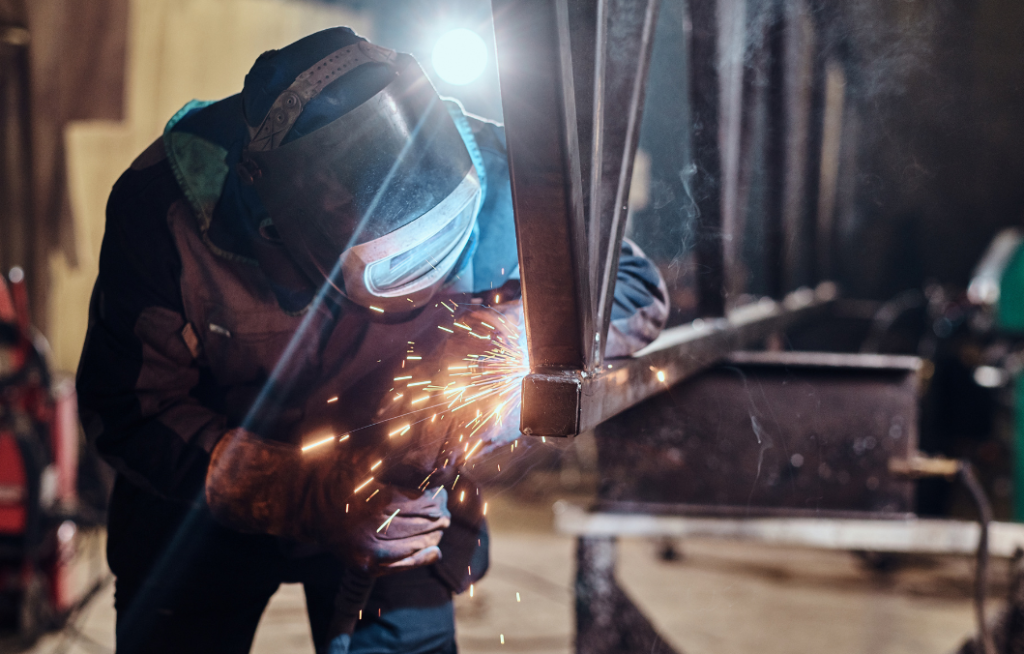
Welding distortion is not random. It is the predictable result of thermal expansion followed by constrained contraction. When weld metal...