01 Jan 2026
Edge Quality in CNC Cutting: Why It Matters More Than You Think
CNC cutting edge quality is a measurable output of thermal control, gas stability and machine calibration. It is not cosmetic....
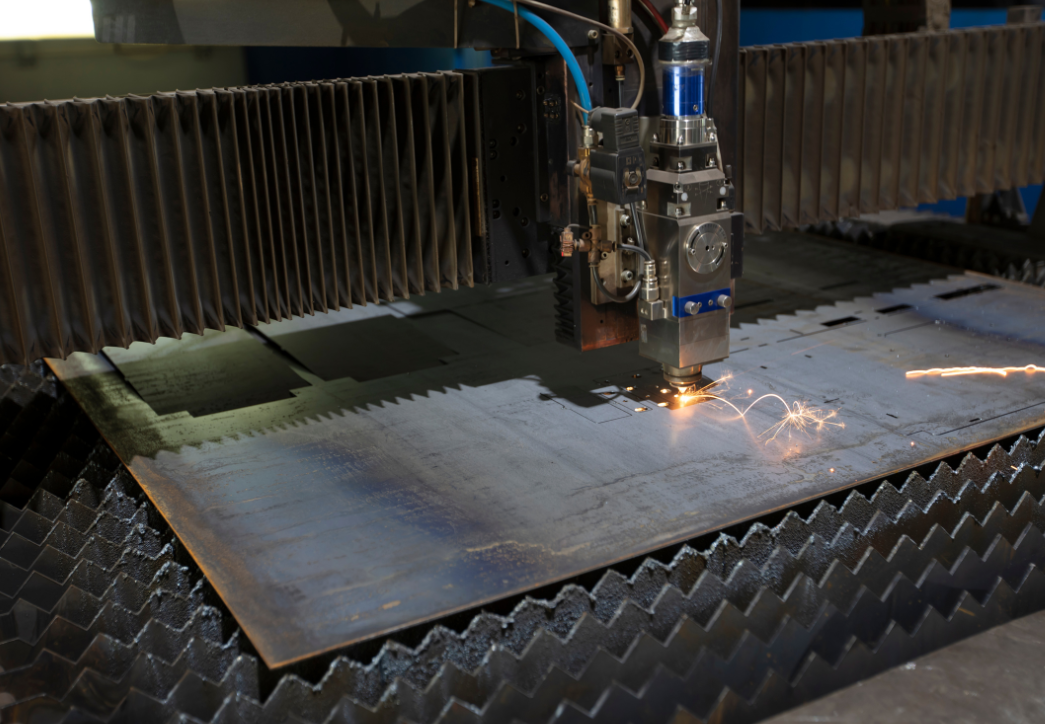
Mixed alloy production runs expose weaknesses in parameter control faster than single-material jobs. Aluminium, stainless steel and carbon steel respond differently to laser energy, gas dynamics and thermal cycling. Applying shared settings across dissimilar alloys introduces kerf instability, variable heat-affected zones and inconsistent edge formation.
To optimise CNC cutting parameters in mixed production, engineers must treat speed, power density, assist gas behaviour and thermal input as a linked system. Material properties govern response. Process discipline governs outcome.
For engineering and design teams managing prototyping or low-volume, high-mix production, alloy-specific CNC strategies protect dimensional stability and structural performance across varied grades and thicknesses.

Laser cutting performance is driven by material absorption, thermal diffusivity and melt viscosity.
Aluminium reflects a higher proportion of fibre laser wavelength energy compared with mild steel. Initial coupling efficiency is lower, which increases sensitivity to focal position and pierce parameters. Once energy is absorbed, aluminium’s high thermal conductivity dissipates heat quickly. This supports narrow heat-affected zones but increases risk of incomplete penetration if linear energy density drops.
Stainless steel behaves differently. It retains heat within the cut zone due to lower thermal conductivity. Melt viscosity remains higher than that of aluminium, which affects dross ejection and kerf wall smoothness. Excess energy input promotes wider HAZ and potential microstructural change near the edge.
Common mixed-run challenges include:
Cutting aluminium vs stainless steel in one schedule demands parameter adjustment at the material level, not just the thickness level.
Cutting speed determines linear energy density, which directly influences kerf formation and edge morphology.
If speed is too high relative to power, incomplete penetration occurs and striations deepen. If speed is too low, excess energy accumulates, widening the HAZ and increasing dross adhesion.
Material-dependent guidance for fibre laser systems often follows this logic:
| Material Type | Thickness Band | Relative Speed Range | Primary Risk |
| Aluminium | Thin gauge | Higher feed rate | Melt instability, edge rollover |
| Stainless Steel | Thin to mid | Moderate feed rate | Heat accumulation, striation growth |
| Mild Steel (Oxygen assist) | Mid thickness | Moderate to lower feed rate | Oxide scale, excessive heat input |
Cutting speed by material type must account for:
A single speed selected for convenience reduces predictability. Mixed alloy runs require programmed speed bands indexed by material grade and thickness.
Laser power and assist gas operate as a coupled system. Power determines melt generation. Gas pressure governs melt evacuation.
In aluminium and stainless steel, nitrogen is typically used to prevent oxidation. Gas purity affects edge brightness and weld readiness. Inadequate nitrogen purity increases oxide formation along the kerf wall.
Gas pressure must be sufficient to expel molten material from the cut zone. Too low, and dross adheres to the lower edge. Too high, and turbulence destabilises the melt front.
Carbon steel cut with oxygen introduces an exothermic reaction. The oxidation process supplements laser energy, increasing effective heat input. This improves cutting efficiency but widens the heat affected zone and increases oxide layer thickness.
CNC gas pressure adjustment should consider:
Power-to-thickness ratios must remain aligned with feed rate. Excess power applied to thin aluminium leads to edge rounding and dimensional drift. Insufficient power on stainless increases taper and incomplete penetration risk.

Heat input must be controlled to protect flatness and metallurgical stability.
Aluminium dissipates heat rapidly, reducing risk of residual stress accumulation. Stainless retains heat, which increases risk of distortion and HAZ widening. Repeated adjacent cuts in stainless intensify thermal load within the sheet.
To control heat behaviour:
Excessive heat input may promote microstructural change in certain steels, including localised hardness variation near the cut edge. For fatigue-sensitive components, HAZ width must remain consistent across mixed alloy batches.
Alloy-specific CNC strategies should therefore include thermal mapping logic during nesting and programming.
Nozzle geometry influences assist gas flow symmetry and kerf wall quality.
Single nozzles produce focused gas streams suitable for nitrogen cutting in stainless steel and aluminium. Double nozzles support oxygen cutting stability in carbon steel by improving gas containment.
Nozzle concentricity relative to the laser beam is critical. Misalignment produces uneven gas distribution, increasing taper on one side of the kerf.
Mixed alloy production accelerates consumable wear variability. Stainless cutting may increase spatter adhesion at the nozzle tip. Aluminium may leave deposits that alter gas flow characteristics.
Wear tracking should be integrated into run planning. Visual inspection alone is insufficient. Changes in kerf symmetry or burr height often indicate nozzle degradation before visible damage appears.
Multi-material CNC programming must combine parameter discipline with operational efficiency.
Advanced strategies include:
Useful CAM approaches for mixed alloy runs:
This structure reduces setup error risk and stabilises mixed alloy throughput without sacrificing edge integrity.
CNC cut quality control in mixed runs must move beyond dimensional checks.
Edge evaluation should include:
Monitoring Cp and Cpk across material families provides insight into parameter stability. If kerf width variation increases following a material change, gas pressure or focal height may require recalibration.
In-process inspection should occur immediately after first parts of each alloy batch. Waiting until batch completion increases scrap exposure.
Greengate Metal Components supports complex mixed-alloy programmes through structured parameter libraries, controlled gas selection, calibrated CNC metal laser cutting systems and disciplined in-process validation. Each alloy and thickness combination is assessed before release into production to protect kerf stability, edge condition and dimensional accuracy across the full run.
For engineering teams planning prototype builds, low-volume high-mix batches or production transfer across multiple alloys, early parameter alignment reduces risk and protects timelines.
To discuss drawings, material grades, tolerance bands or to request a quotation, contact us today with your technical specification and production volumes for review.

CNC cutting edge quality is a measurable output of thermal control, gas stability and machine calibration. It is not cosmetic....

The cost of CNC metal cutting is rarely a fixed number, so it often catches people out when quotes come...

The discussion around 3D printing vs CNC keeps coming up, so it reflects how manufacturing teams now weigh accuracy against...