28 Jan 2026
How Can Welded Fabrications Be Designed to Minimise Distortion and Rework?
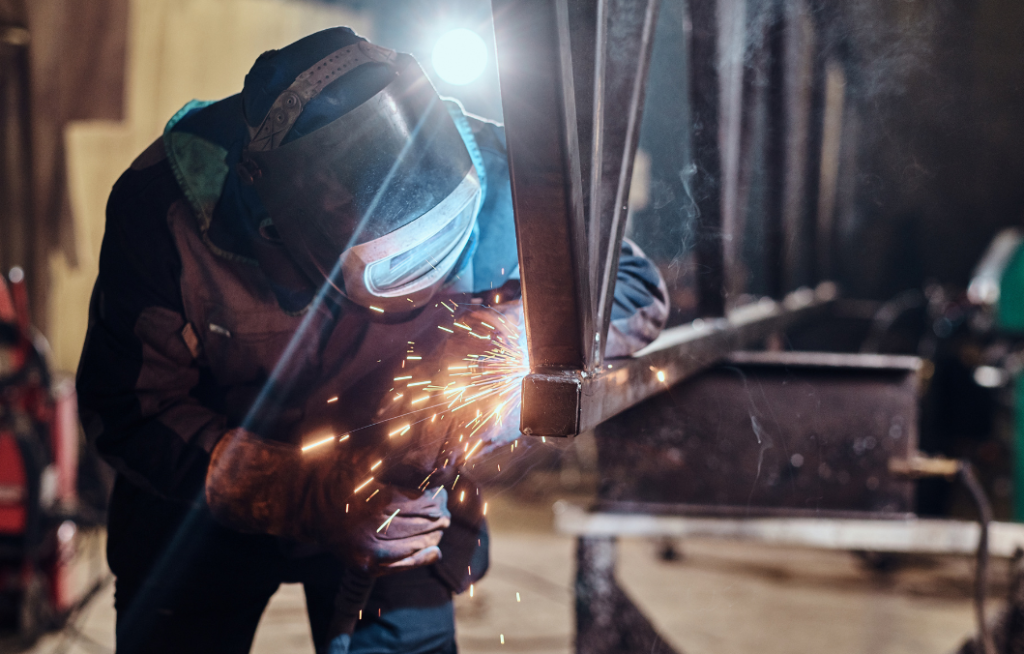
Welding distortion is not random. It is the predictable result of thermal expansion followed by constrained contraction. When weld metal...

When engineers specify sheet metal laser cutting, attention usually centres on material grade, thickness and available laser power. Those inputs define feasibility. Yet they do not, on their own, define outcome.
CNC gas selection sits alongside them as a primary process variable, and its influence extends far beyond simply clearing molten metal from the cut zone.
Assist gas determines how material reacts under thermal load, how efficiently molten metal evacuates from the kerf, and how the cut edge behaves during subsequent operations. It influences oxidation, hardness, dimensional stability and surface condition. These effects accumulate; they shape welding preparation time, coating performance and assembly fit.
Treating gas as a background utility introduces avoidable variability. Treating it as a controlled parameter strengthens consistency and cost predictability across the entire job.
In CNC laser cutting, the beam raises the material temperature beyond its melting point. The assist gas is then directed coaxially through the nozzle to expel molten metal from the kerf. The efficiency and chemistry of that interaction govern the final edge condition.
With oxygen laser cutting, the gas reacts with hot steel. The reaction generates additional thermal energy within the cut. This accelerates material removal but produces an oxide layer along the edge. The surface darkens and may require mechanical cleaning before welding or coating.
With nitrogen laser cutting, the gas acts as an inert shield. It displaces atmospheric oxygen and prevents oxidation at the cut interface. The resulting edge remains bright and comparatively clean, which is advantageous where appearance or corrosion resistance matters.
Compressed air laser cutting introduces a mixed environment. Containing both nitrogen and oxygen, it enables cost control but allows a controlled degree of oxidation.
Edge outcomes typically follow this pattern:
For design engineers, this distinction directly affects downstream process time. For manufacturing SMEs operating on tight margins, it affects labour allocation and rework risk.

Gas chemistry influences not only finish quality but production rate. Oxygen supports a reactive cutting mechanism. The exothermic reaction between oxygen and mild steel contributes additional energy to the cutting process. This allows thicker mild steel to be processed at higher speeds compared with inert gas operation at equivalent laser power.
Nitrogen does not participate chemically. All cutting energy derives from the laser itself. Achieving comparable penetration depth often requires higher power density and elevated gas pressure. Machine cycle time may increase, and gas consumption rises.
Compressed air offers an intermediate solution. It supports moderate speeds with reduced gas cost compared with bottled nitrogen, particularly in thinner gauges.
A practical comparison is shown below:
| Gas Type | Relative Speed | Edge Condition | Typical Application |
| Oxygen | High | Oxidised | Thicker mild steel structural parts |
| Nitrogen | Moderate | Clean, bright | Stainless steel, aluminium, visible surfaces |
| Compressed Air | Moderate | Light oxidation | Thin sheet, cost-sensitive production runs |
Throughput analysis must extend beyond machine time. If oxygen increases cutting speed but introduces additional grinding, the apparent gain may diminish once secondary labour is considered.
Oxygen enables reactive cutting. As the laser heats the material, oxygen supports rapid oxidation within the kerf. The reaction releases additional heat, sustaining efficient penetration in thicker mild steel sections.
This approach remains widely used for structural components where cosmetic finish is not the primary concern. However, higher thermal input enlarges the heat-affected zone. Edge hardness may increase. Oxide scale forms along the cut surface. Where weld preparation or surface coating follows, these factors must be factored into the process plan.
Nitrogen functions as an inert process gas. It prevents oxidation by excluding oxygen from the cut zone. The cut edge retains its metallic appearance, which is valuable in stainless steel and aluminium fabrication, where surface integrity supports corrosion performance and aesthetic standards.
Nitrogen laser cutting typically requires higher gas pressure and consistent purity. Consumption rates are greater, and supply stability becomes significant for repeat production. In applications where reduced finishing offsets higher gas cost, nitrogen provides a technically sound route.
Compressed air, when properly filtered and dried, provides a controlled blend of gases suitable for many thin-gauge applications. Technical guidance, from various industry experts, suggest the need for stable pressure, low moisture content and consistent delivery in compressed air systems used for laser processes.
Compressed air laser cutting reduces dependency on bottled gases and can lower operating costs. The trade-off lies in the edge condition. Light oxidation may occur, and finish uniformity may vary depending on air quality control. For internal components or parts receiving secondary treatment, this balance can be commercially acceptable.
Thermal input influences material behaviour during and after cutting. Reactive processes such as oxygen cutting introduce additional heat into the workpiece. That heat expands the material locally. As cooling occurs, contraction follows. This thermal cycle affects flatness and can widen the heat-affected zone.
In thin sheet, localised heat variation increases distortion risk. In precision assemblies, slight movement during cooling can shift hole position or slot geometry beyond acceptable laser cutting tolerances. In thicker sections, edge hardening may affect subsequent machining or tapping operations.
CNC gas selection, therefore, interacts with tolerance control. Stable gas flow, consistent chemistry and appropriate pressure support predictable kerf width and repeatable dimensional performance. For engineering firms developing prototypes, this stability reduces iteration cycles. For SMEs managing batch production, it reduces rejection rates.
Laser cutting gas pressure governs molten material evacuation. If pressure is too low, ejection becomes incomplete and molten metal solidifies along the lower edge. If pressure fluctuates, kerf width may vary, affecting fit.
Common consequences of incorrect laser cutting gas pressure include:
Excessive pressure introduces its own problems. Turbulence within the cut zone can disturb molten flow and reduce edge stability. Pressure selection must reflect material thickness, nozzle diameter and gas type.
Gas purity influences oxidation behaviour and repeatability. Minor contamination levels may alter edge colour and surface condition. In single prototypes, this variation may appear negligible. Across repeated production runs, inconsistency becomes measurable.
For manufacturers supplying regulated industries, repeatability is not optional. Stable gas purity supports consistent edge formation, predictable finishing performance and documented process control. Without it, quality variation increases and root cause analysis becomes more complex.
Reliable CNC gas management forms part of a wider quality framework rather than a standalone utility.
Effective specification begins with technical dialogue rather than a purchase order alone. Gas selection should be considered alongside geometry, finish requirement and production volume.
Key points to review include:
Addressing these factors early allows gas behaviour to be matched to function rather than defaulted to convenience.
At Greengate Metal Components, these variables form part of the discussion within our sheet metal laser cutting services. CNC gas selection is treated as a controlled parameter within the broader cutting strategy, aligned with tolerance demands, finish expectations and production timelines. That approach supports precision, protects downstream efficiency and reduces avoidable cost.

Welding distortion is not random. It is the predictable result of thermal expansion followed by constrained contraction. When weld metal...
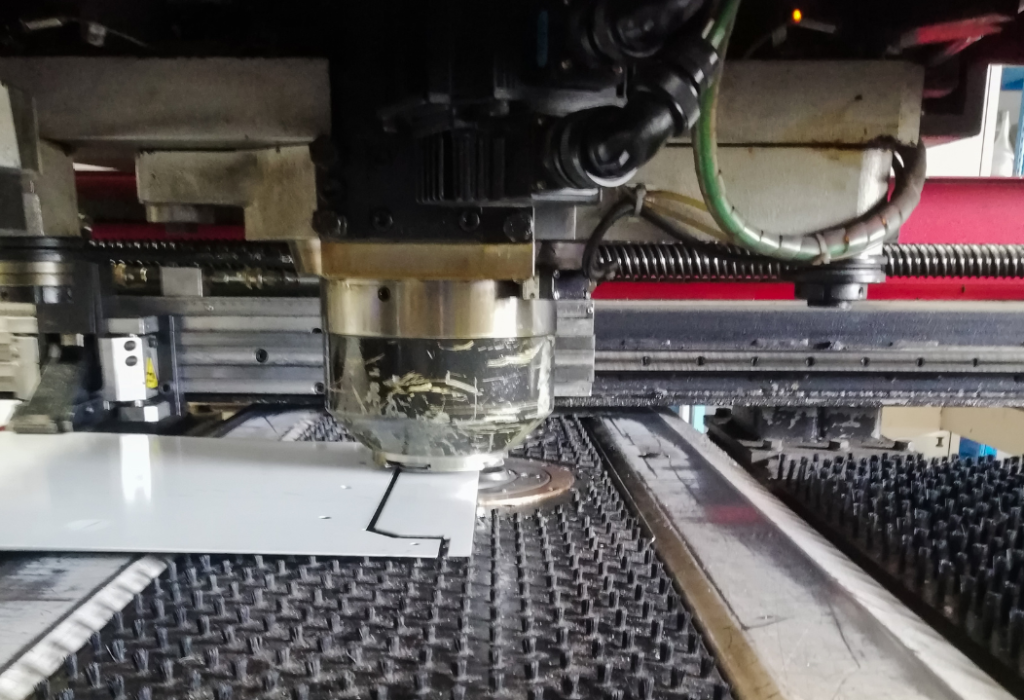
Punching is a controlled shearing process governed by force, clearance and tool condition. On a drawing, a hole or slot...
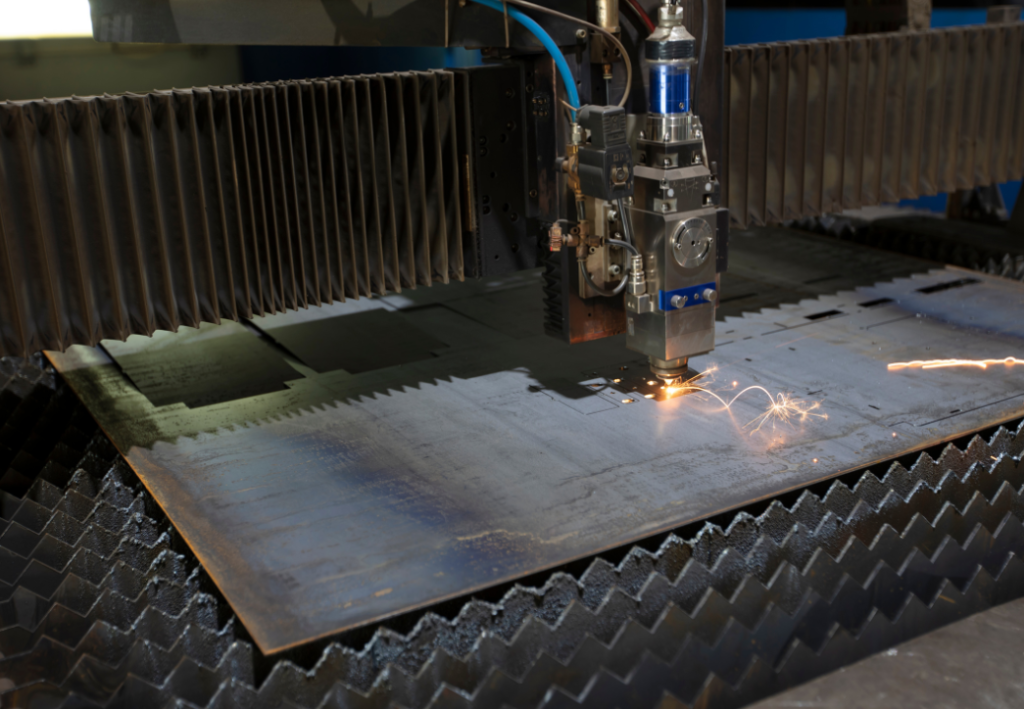
Mixed alloy production runs expose weaknesses in parameter control faster than single-material jobs. Aluminium, stainless steel and carbon steel respond...